Research
Modeling Methods
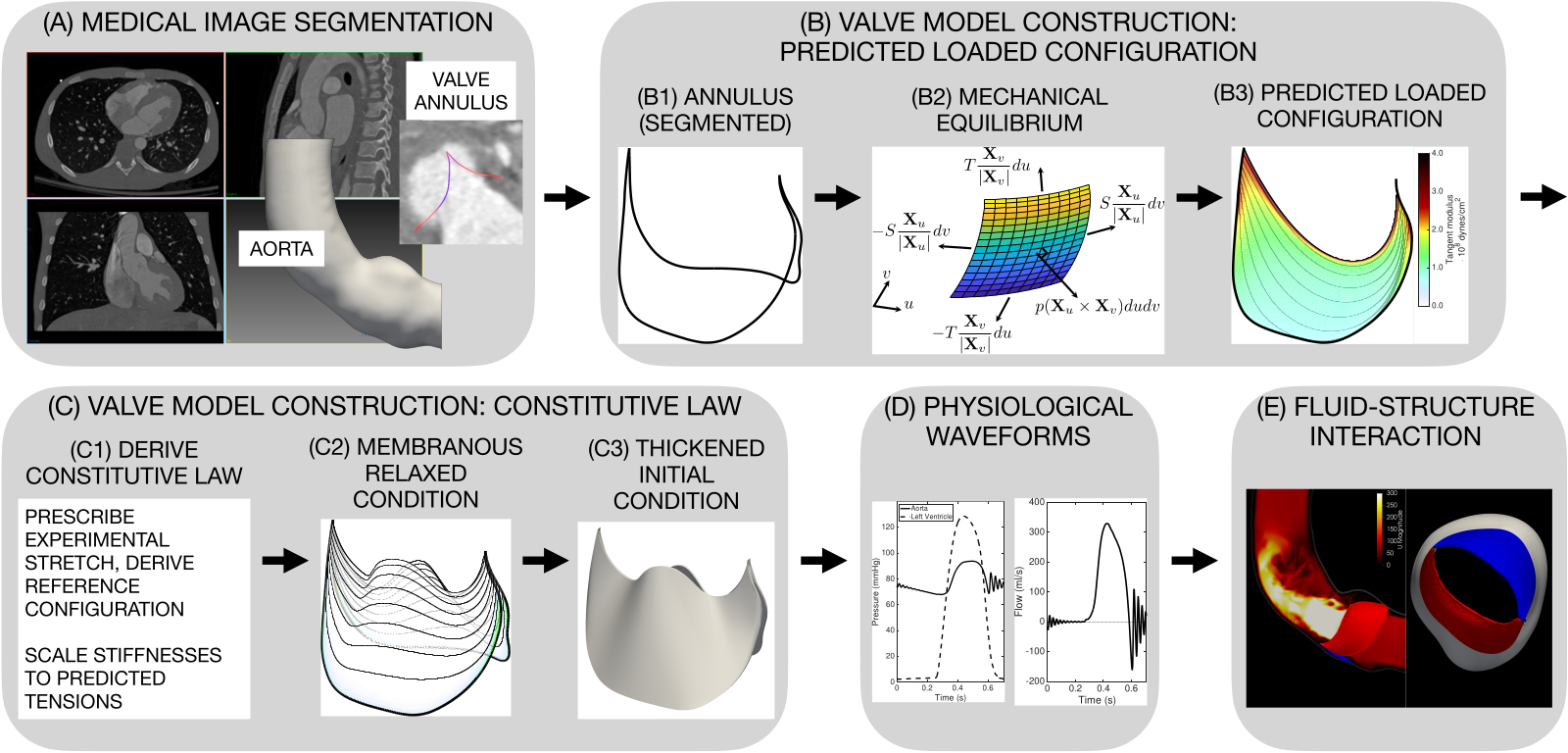
One of my favorite techniques is elasticity-based design, which has been applied to the aortic and mitral valves. We require that the model valve supports a pressure, find an associated differential equation, then derive valve geometry and material properties from its solution. By altering parameters in these differential equations – specifying just the right math problem – we design the emergent model to match experimental data where the data is good, but produce features like material heterogeneity and a full map of fiber orientations that are very difficult to measure experimentally. These techniques illuminate facts and generate hypotheses about valve anatomy and mechanics, and they make highly effective models to use in fluid-structure interaction simulations for studies of flow and disease. Finally, because leaflet geometry comes from equations rather than from medical imaging, we can vary it to prototype virtual surgical repairs or build a valve that fits the patient’s anatomy even when leaflets are not visible on their scans.
Publications: [Mitral Elasticity-Based Design], [Aortic Elasticity-Based Design], [4D MRI Comparison].
Simulation-Guided Design for Cardiac Surgery
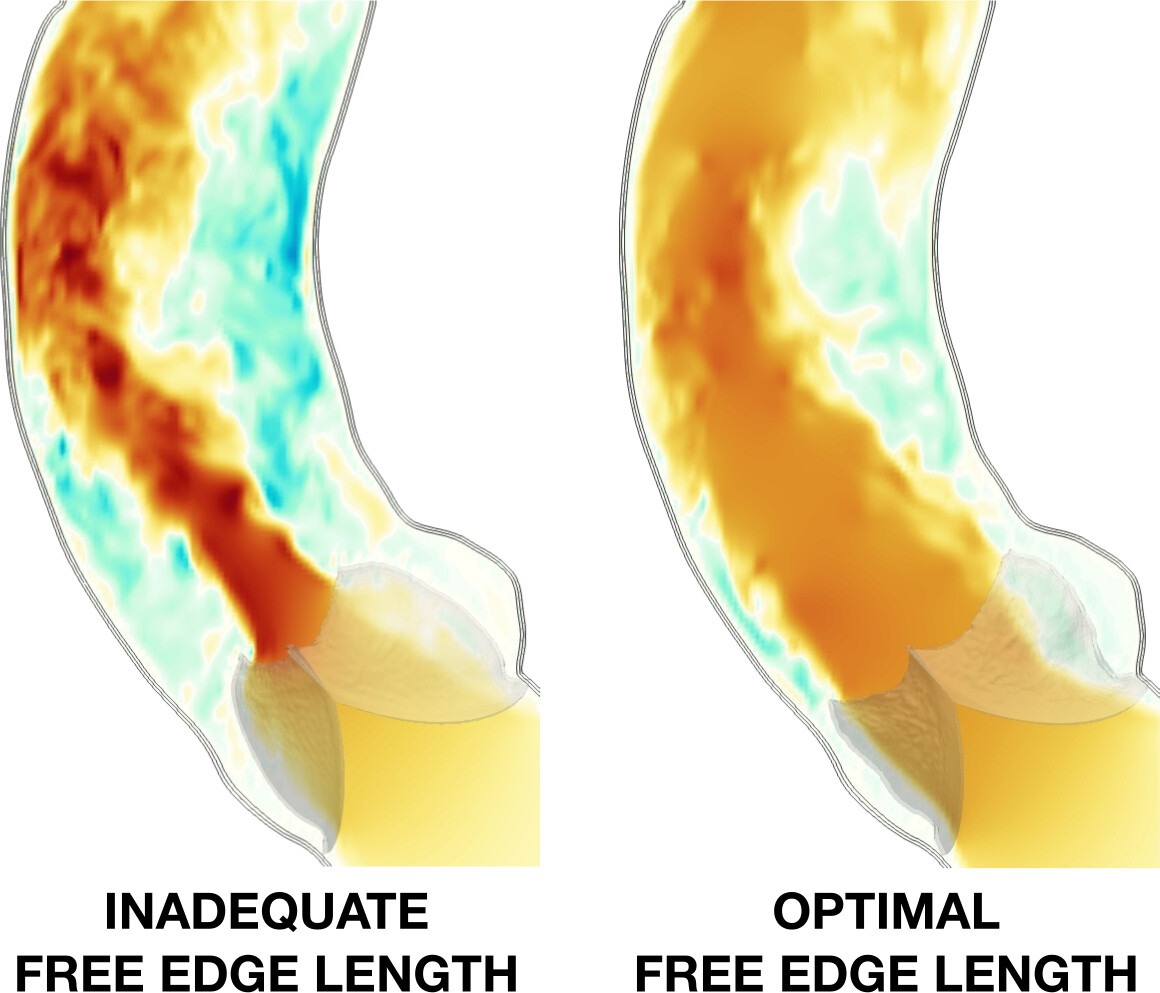
Much of my current work focuses on simulation-guided design for cardiac surgery. Congenital heart disease affects approximately one in every hundred births, making it the most common congenital disorder, and it often requires surgery. Surgical procedures in children, however, are frequently based on an empirical, retrospective, “guess and check” approach. I create engineering design tools to optimize procedures and improve patient outcomes. Surgeons at Stanford now perform repairs using simulation-predicted leaflet geometry, with excellent preliminary results.
Publications: [Sim-Guided Design of Surgical Repair], [Sim-Guided Design of Surgical Repair II], [Clinical Translation of Surgical Repair].
Pathophysiology of Congenital Heart Disease
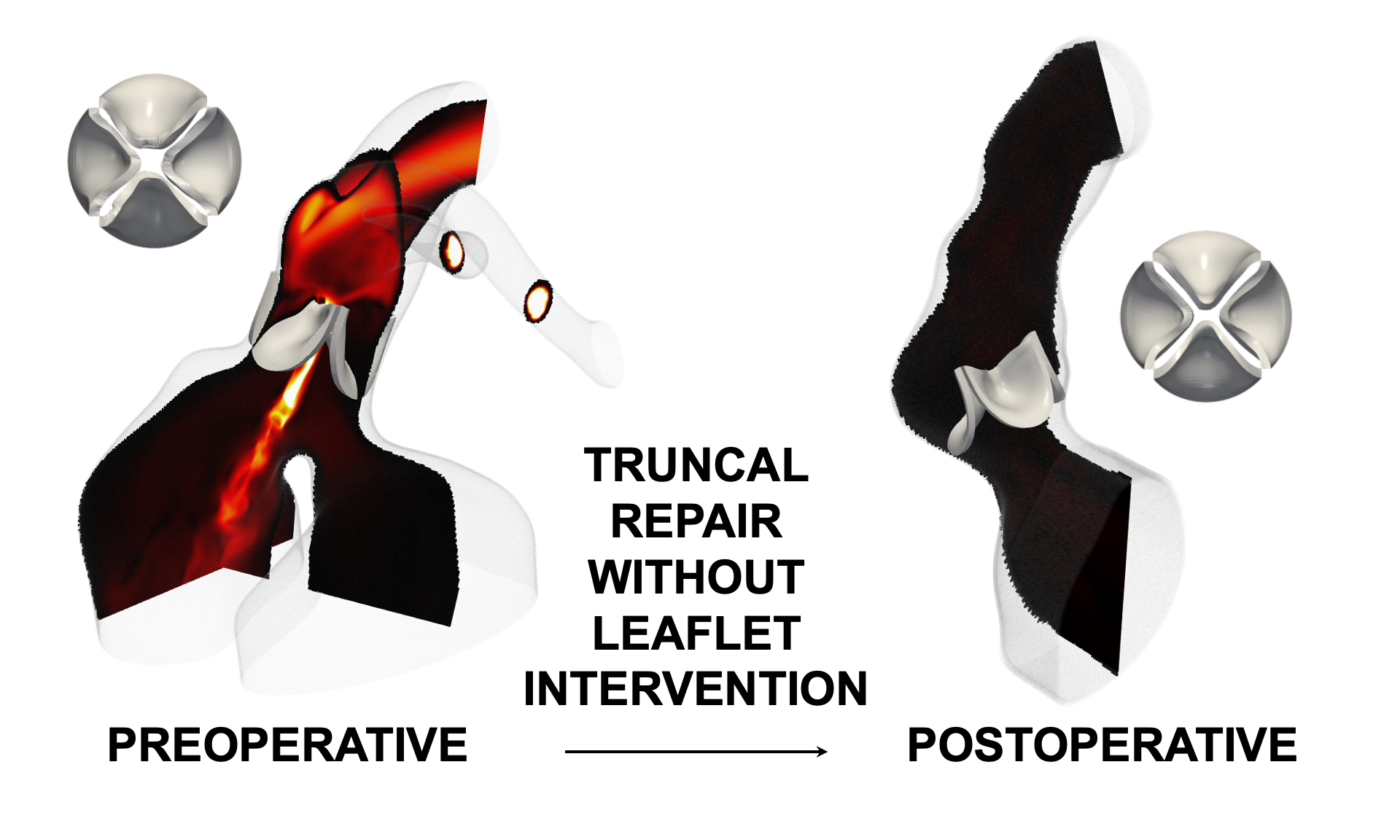
I use modeling and simulation tools to study the pathophysiology of congenital heart disease. One recent study (movie) led by postdoc Karoline Bornemann focused on truncus arteriosus, a rare and severe congenital heart disease. We found that, contrary to conventional wisdom, valve performance improved after repair without direct intervention to the leaflets, a trend that was confirmed on clinical imaging.
Publications: [Rare Disease Physiology of Truncus Arteriosus], [Bicuspid Flows].